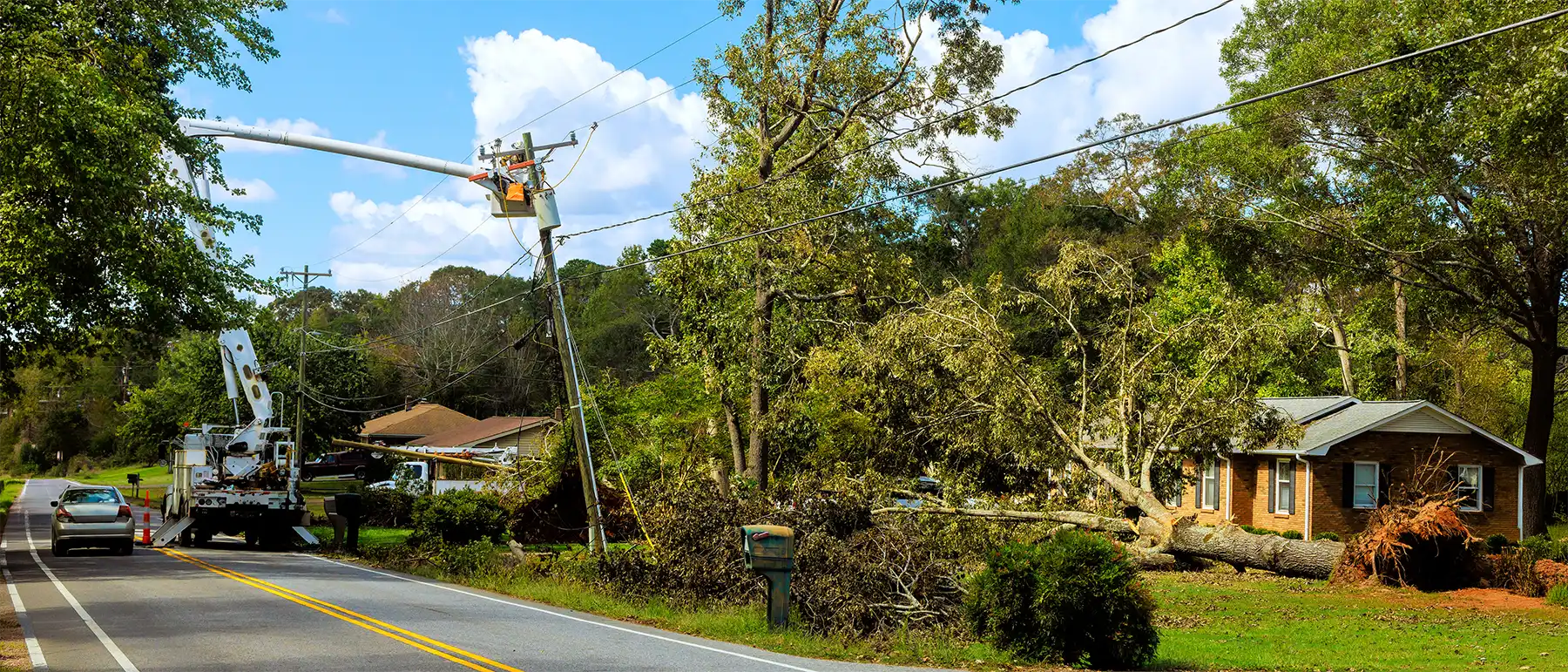
When severe weather affects utility infrastructure, the first challenge is often visibility. Utilities must quickly understand what happened, where damage occurred, and which resources are needed to restore service safely and efficiently. The sooner utilities gain operational clarity, the sooner restoration can begin.
Canopy Infrastructure Solutions provides storm damage assessment, real-time reporting, and technology-enabled field support to help utilities quickly assess vegetation and infrastructure impacts. By integrating with utility technologies, GIS platforms, outage management systems, and established operational workflows, Canopy delivers actionable field intelligence that improves situational awareness, accelerates damage assessment, prioritizes restoration efforts, and supports more informed decision-making throughout storm response operations.
Why Storm Assessments Matter
It’s more than identifying broken infrastructure. Utilities must assess, evaluate, and mitigate risks, including:
- Customer impact areas and concerns
- Worker safety hazards
- Wire guards and vegetation
- Damaged poles and lines
- Access limitations
- Resource deployment needs
Without structured assessments, restoration efforts can be delayed or fragmented. Storm assessments matter because storm workers are often first on the scene and need to make recommendations that prioritize worker, public, and community safety. Additionally, consider potential customer concerns, minimize regulatory issues, and, most importantly, to the affected community, restore power.
Canopy teams assess damage in the operational context because they understand both vegetation and line infrastructure operations.
The Importance of Speed
The first hours after a storm are critical. Utilities need quick answers to key operational questions to know when it’s safe to begin damage assessment:
- Which areas were impacted most severely?
- What hazards exist?
- What crews and equipment are needed?
- Which outages should be prioritized?
When field conditions (like wind speed) are at an acceptable level, crews are dispatched to the affected areas. Structured assessment teams help utilities gather consistent field intelligence, reduce uncertainty, and improve restoration planning. Ultimately, it helps reduce the time to restore power to critical infrastructure and the public.
Real-Time Reporting Improves Decision-Making
Modern storm response depends on real-time operational awareness. This includes equipment, such as whether a manual or a bucket truck is required, and assets such as materials, pole class or type, and transformers. Other considerations:
- Equipment and crews needed
- Types of materials required to build
- Risk and safety concerns
Canopy integrates mobile reporting and field data collection into storm assessments to improve visibility into:
- Damage severity
- Work progress
- Crew deployment
- Restoration priorities
- Emerging risks
This allows leadership teams to make faster, more informed operational decisions during rapidly changing conditions.
Safety Comes First

Storm environments are unpredictable. Downed conductors, unstable trees, flooding, damaged infrastructure, and crew fatigue all increase operational risk. Conducting structured damage assessments before restoration begins gives utilities a clearer understanding of site conditions, potential hazards, access challenges, and priority work areas. Just as importantly, post-storm patrols identify additional vegetation hazards and damaged trees that may not have caused the initial outage but could create future reliability or safety issues if left unaddressed. This proactive approach helps protect crews, supports more efficient restoration, and reduces the likelihood of repeat outages.
Supporting Long-Term Resilience
Storm assessments do more than support immediate restoration. The information gathered after severe weather also helps utilities improve future planning, prioritize system hardening, and strengthen long-term resilience strategies.